

The Path of the Lich (D&D 5.5E Deep Dive)
As an Amazon Associate I earn from qualifying purchases.
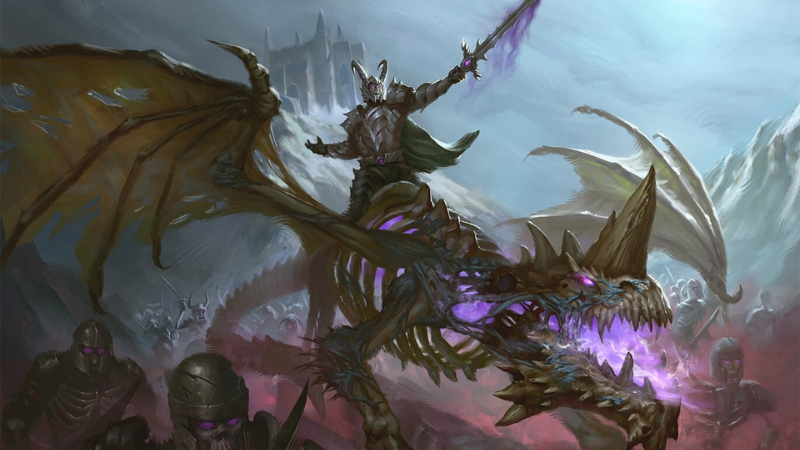
In Dungeons & Dragons there are few monsters more feared than a Lich. Undead sorcerers who have traded their souls for pure arcane power, they’re the ultimate undead BBEG, often testing the heroic resolve of characters.
That’s about to change, however, thanks to the latest Unearthed Arcana playtest. Entitled Villainous Options, the material introduces the new Path of the Lich, a sequential series of Feats that, when completed, allow high-level characters to actually become a Lich.
So is this new transformation a shortcut to ultimate power or a one-way trip to the Nine Hells? Below, we break down all the soul-shattering details.

What is a Lich Dungeons & Dragons?
In the lore of D&D, Liches are powerful spellcasters who have conquered death by undergoing a horrific transformation known as the Ritual of Becoming. This dark process requires the caster to craft a spirit jar (also known as a phylactery) which is typically an every day object, such as an amulet or bottle, to house their soul. They then brew a lethal “lichnee potion” often made from the blood of innocents, which they drink during the ritual. The caster’s mortal body then dies and is reanimated as an undead husk. This state grants them immense powers, including functional immortality for as long as their spirit jar remains intact. Beyond their eternal life, liches possess a mastery of high-level magic, a paralyzing touch that can freeze the blood of the living and a terrifying aura that causes the weak-willed to flee in fear.
Notably, the D&D multiverse has been terrorized by several legendary liches. Among the most infamous is Vecna, an arch-lich who eventually ascended to godhood. Acererak is another dreaded name, known for constructing deathtrap dungeons like the Tomb of Horrors to harvest the souls of adventurers. In the land of Thay, the Zulkir of Necromancy Szass Tam rules with an iron, skeletal fist, while the ancient Netherese lich Larloch remains one of the most powerful beings in existence within his lair at Warlock’s Crypt. Other notable examples include Sammaster, the founder of the Cult of the Dragon, and Valindra Shadowmantle, a formidable elven lich who has plagued the North for centuries.

What is the Path of the Lich?
The Path of the Lich is a character option for D&D 5.5E currently in playtest. It’s built around completing sequential Feats and involves the following steps:
Step 1: The Path starts by you by choosing a Lich Rite that must be completed (there is no level requirement for this and is really meant to provide a narrative framework for your push to lichdom).
Step 2: At Level 4, you must then take the Lich Initiate feat.
Step 3: At any point from Levels 5 to 11, you must then choose at least one more Feat from the options of Arcane Restoration, Transfer Life or Undead Grasp
Step 4: At Level 12 or higher you take Lich Ascension Feat, which completes your transformation.

What are the Path of the Lich Feats?
Lich Rites
The path to lichdom is unique to each who walks it. To complete the transformation, aspirants must fulfill a personal and often profane ritual. This must be chosen before you take your first Path of the Lich Feat.
| 1d6 | To Conduct Your Ritual, You Must… |
| 1 | Consume one hundred souls to strengthen your magic. |
| 2 | Decipher and recite a forbidden incantation from a lost tome written in a dead language. |
| 3 | Use ancient abjuration magic to conceal yourself from the gods of death. |
| 4 | Pen a blasphemous verse and perform it in a defiled temple. |
| 5 | Craft a potion from your victims’ remains and imbibe it beneath a full moon. |
| 6 | Corrupt your soul so completely no afterlife will accept it. |

Lich Intitiate
Prerequisite: Level 4+, Spellcasting or Pact Magic Feature
You take the first steps toward lichdom, which involve creating your spirit jar, a magical vessel that anchors your soul to the world of the living. You gain the following benefits:
- Ability Score Increase. Increase your Intelligence, Wisdom, or Charisma score by 1, to a maximum of 20.
- Creating Your Spirit Jar. Choose a Tiny object of great significance to you. You spend a Long Rest anchoring your soul to this object. You can have only one spirit jar at a time; if you create a second, the old one is destroyed.
- Spirit Jar Destruction. Your spirit jar’s AC equals your spell save DC, and it has HP equal to your spellcasting ability modifier + your character level. If destroyed, you gain 2 Exhaustion levels and cannot use Soul Siphon until you create a new one.
- Soul Siphon. When you or someone within 10 feet of you reduces a Humanoid enemy to 0 HP, you can consume its soul (no action required). On your next turn, the first creature you hit with an attack takes extra Necrotic damage equal to 1d6 + your spellcasting ability modifier. A soul consumed this way can only be restored by True Resurrection or Wish.

Spirit Jars
Below are options for what your spirit jar could consist of.
| 1d6 | Your Spirit Jar Is … |
| 1 | An acorn from a forest destroyed long ago. |
| 2 | A love letter from a deceased paramour. |
| 3 | The inkwell used to scribe your first spell or prayer. |
| 4 | The defaced holy symbol of a god you’ve denounced. |
| 5 | A bell whose toll becomes lower with each soul you collect. |
| 6 | A desiccated body part—such as an eye, finger, or horn. |

Arcane Restoration
Prerequisite: Lich Initiate Feat
- Ability Score Increase. Increase Intelligence, Wisdom, or Charisma by 1 (max 20).
- Essence Rejuvenation. When you use Soul Siphon, you can choose to recover expended spell slots with a combined level no greater than 4. Once used, you must finish a Short or Long Rest to use it again.

Transfer Life
Prerequisite: Lich Initiate Feat
- Ability Score Increase. Increase Intelligence, Wisdom, or Charisma by 1 (max 20).
- Soul Transference. When you use Soul Siphon, you can choose a creature within 60 feet to gain Temporary Hit Points equal to your Proficiency Bonus + your spellcasting ability modifier (minimum 1).

Undead Grasp
Prerequisite: Lich Initiate Feat
- Ability Score Increase. Increase Intelligence, Wisdom, or Charisma by 1 (max 20).
- Paralyzing Touch. You learn the Chill Touch cantrip. When you deal damage with it, you can expend a spell slot (level 1+) to deal an extra 1d10 Necrotic damage per slot level. The target must succeed on a Constitution save or be Paralyzed until the start of your next turn.

Lich Ascension
Prerequisite: Level 12+, at least two Path of the Lich Feats)
Your path to lichdom is complete. You gain the following benefits:
- Ability Score Increase. Increase Intelligence, Wisdom, or Charisma by 1 (max 20).
- Undead. Your creature type is Undead.
- Unholy Anatomy. You have Resistance to Necrotic and Poison damage. You don’t gain Exhaustion from dehydration, malnutrition, or suffocation.
- Frightening Gaze. You learn Fear and always have it prepared. You can cast it without a spell slot a number of times equal to your spellcasting ability modifier per Long Rest.
- Rejuvenation. If you die, you re-form in 1d10 days in the nearest unoccupied space within 5 feet of your spirit jar, provided it is intact.

Is the Path of the Lich worth taking?
It’s important to note that the Path of the Lich is still in playtesting and could change based on player feedback. It’s also not entirely clear what future supplement it will appear in (although our money is on a new Book of Vile Darkness). Regardless, actually taking steps to become a lich is obviously something that’s not going to work in every D&D campaign and definitely requires DM approval first.
You can learn more and submit feedback on the new Path of the Lich via the latest Unearthed Arcana playtest.
More D&D News Coverage
For more from the world of Wizards of the Coast, visit our D&D News page.

Jason Volk is the Publisher of Dungeons & Dragons Fanatics and lives in the wilds of Western Canada. He has been playing D&D for over 25 years and is a huge fan of Dragonlance and the Forgotten Realms. His favorite character of all time was a Necromancer named Neek who spent most of his adventuring career resurrecting the corpses of slain monsters. When he’s not playing TTRPGs, Jason enjoys video games, Magic: The Gathering, Warhammer 40K, watching football and spending time with his wife and adorably nerdy children.
Follow him on Bluesky or on Instagram